

Native Languages Center
Language Documentation Workshop
Module 1:
Overview: Language Documentation

- Module 1 Progress83%
Carrying out the Work
At this point you have determined the type of language documentation project to carry out and identified how it meets the goals of your language program or community. You have also created a Wish List of the materials (data) you want to collect for your project and created an Inventory List of materials that may be already available in your community.
To carry out the work and ensure a successful project you will need to have an understanding of the following:
Data Management
This refers to how you will collect, inventory, store, and archive the materials you collect for your project.
- You will need a system for organizing the materials so that you—and future language workers—can understand what you have collected
- You will need a way to safely store all primary materials including a back-up strategy for storage or recovery
- You will need to develop policies and procedures for appropriate access, process, and use if you do not already have these established
The next module on Documentation & Data Management Plan will provide detail on best practices for data management, the importance of a strong data management plan, and developing a plan for safe storage.
Digital Tools for Documentation
In order to carry out your documentation project you will need (or have access to) various hardware and software depending on the nature of your project.
- You will need manageable and reliable recording devices and media
- You will need access to various software programs (depending on your project) and an understanding of what the various software programs do and which apply to the type of documentation you are conducting.
The 3rd module on Digital Tools for Language Documentation will go more in depth on common devices and software used in language documentation work, cover some best practices, and identify where training might be needed.
Resources to Support Conducting the Work
Lastly, understanding where you can find support for your language documentation project will be important. Support can come in many forms:
- Community Supportor—networking with other language communities and organizations
- Academic Support—you may need to partner with an academic institution for your project
- Commercial Support—if creating a digital app or tool is the goal, you may need to partner with a tech company
- Financial Support—funding is generally needed to complete language documentation projects and can come from a variety of sources such as local tribal support, foundations, or competitive grants
The 4th module on Supporting the Work: Funding, Partners, Technology/Products will take a closer look at these various types of support to help you have successful Language Documentation Project
Resources:
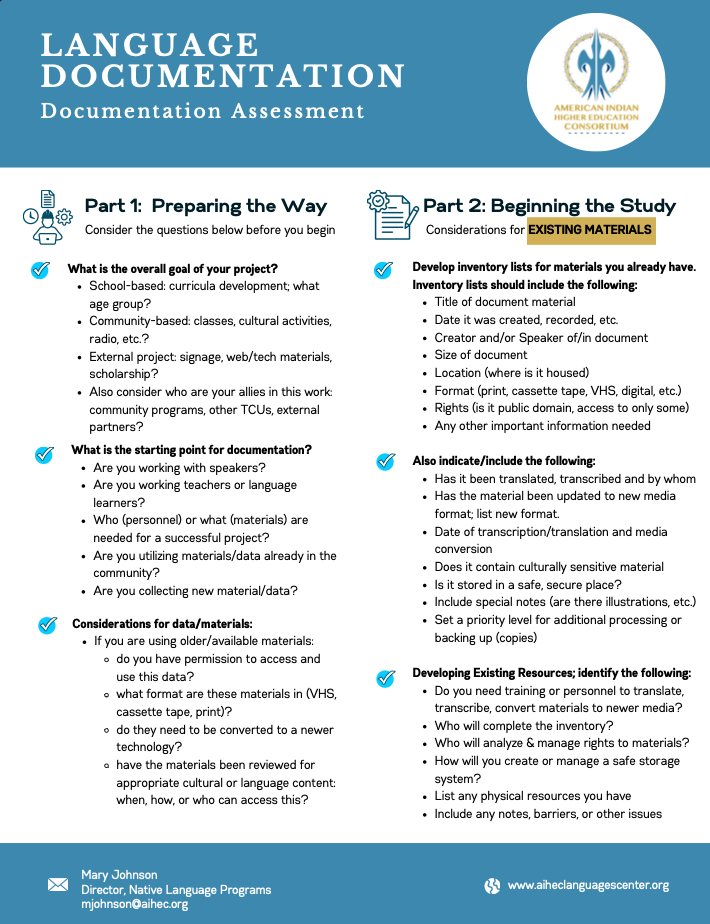
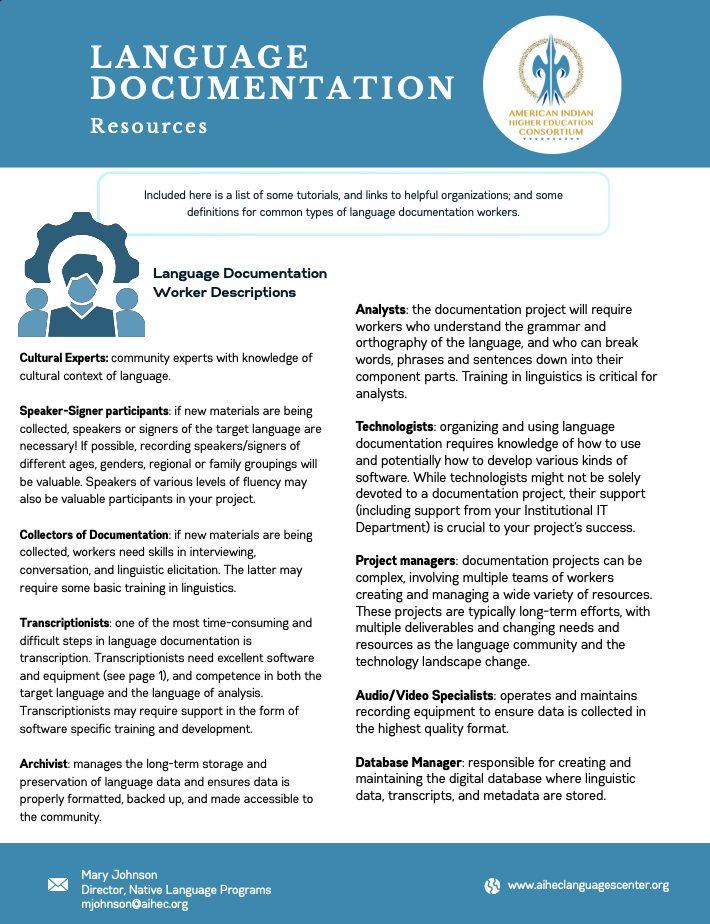
The Resources handout provides information for organizations who may be helpful in planning your project, some tutorial resources, and definitions for common language documentation workers. The Documentation Assessment Sheet is a good companion to the Wish List and Inventory spreadsheets and provides guidance on determining project goals and assessing materials needed.
- Module 1 Progress100%